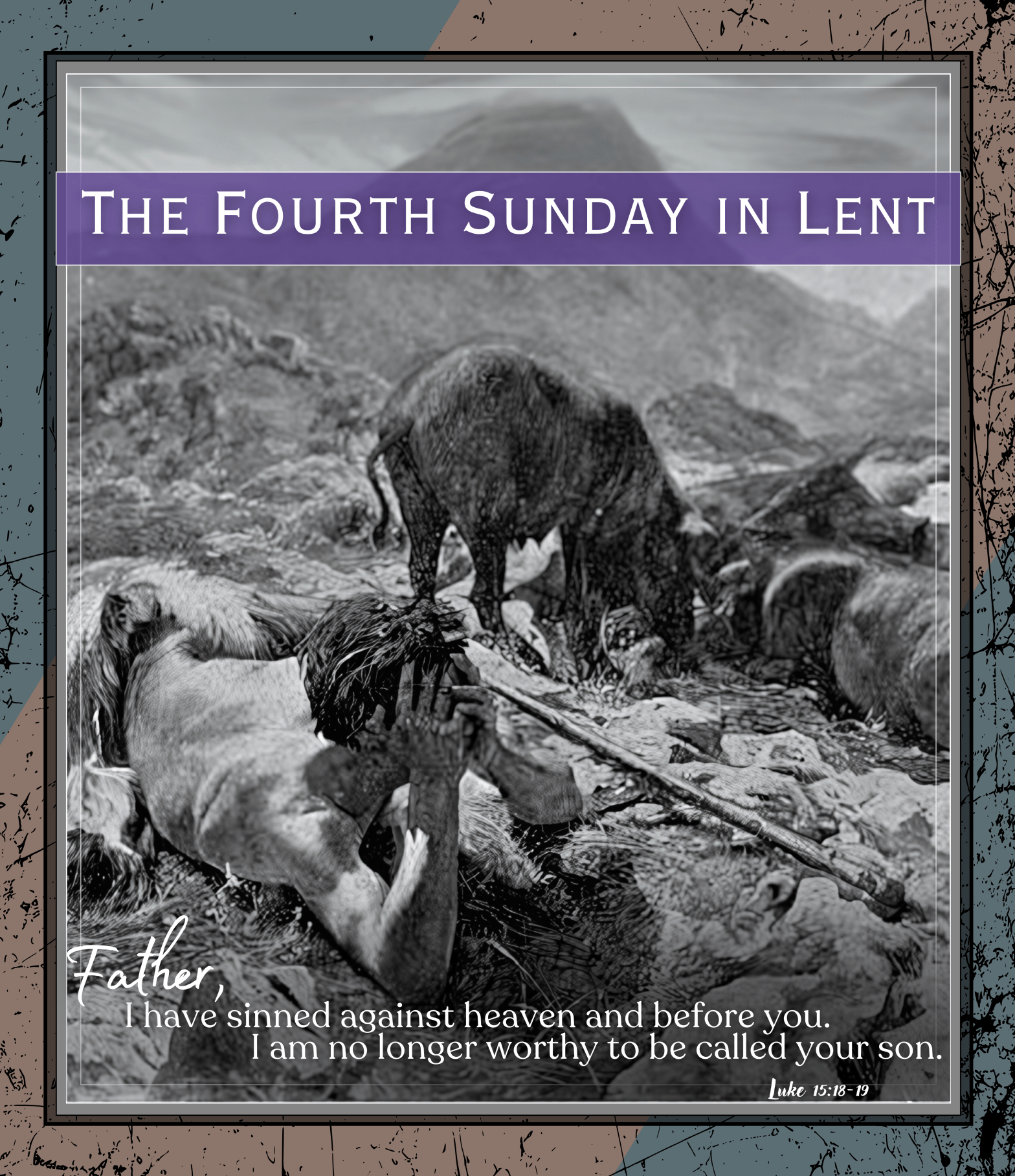
Sermon based on Luke 15:11-32
A Shameful Request. An Unexpected Response
A respected man was blessed with two sons. One day, his younger son says to him, “Father, give me the share of the family property coming to me.” Saying this was as good as telling your father he’s worth more to you dead than alive, because if he’s dead you can get your inheritance. Can you imagine saying that to your father?
The father should have said, “WHAT ?!#?! You wish I was dead? Have you no sense of shame son? How can you say that to my face? Nobody insults my honor like that. You want me dead…I pronounce you dead, and out of the family… out of the will.” This is what everyone in the village would have expected.
Instead, we are told nothing about how the father feels about this terrible hurt and insult. He quietly gathers the title documents and deeds from the family estate. He’s not planning on writing his son out of the will. He’s not planning on disowning his son. No! He’s planning on giving his share: the orchard grandpa planted. The field across the creek where the family picnicked when the boys were young. The woods where they hunted each season. He watches as his son takes all of this beloved land and sells it, dispenses with it for quick payout–probably pennies on the dollar. And then he takes his cash and leaves town with the intention of never returning. Who could show their face after doing what this guy does?
Why would the father allow this? Just imagine the shame! The embarrassment. Who would do this to their father? Who would willingly bring so much shame upon their family?
Understanding Shame
Now it’s this shame issue that makes this parable difficult for us to grapple with, maybe especially us modern-day Americans. The culture we live in makes shame a complicated thing. It’s more than just guilt. Guilt is when we feel remorse for some bad behavior or choice or words that we said and how it hurt someone else. But shame is a whole different level. It’s not just looking at what we did and feeling bad about it, it’s looking at yourself and feeling bad about yourself. Shame poses the question: “What kind of person are you? Because what kind of person would do something like that? And shame is also something we can put upon others when they look at our bad behavior and choices and feel embarrassed by us.
Anyone who has ever had little children knows that sometimes when you fuss at a child or punish a child for something they did that was bad, and they often will instinctively think that they must be “bad people” because they did a bad thing. And you have to help them see the difference between who they are and what they did. Persistent shame can destroy our self-esteem. Unresolved shame can divide families and destroy relationships. So, for those reasons, we normally think of shame as a bad thing.
But isn’t it interesting that we human beings, even from the earliest age have this tendency to question our “goodness” in the face of our sin and its consequences? Surely this goes back to Eden. It was shame that Adam and Eve felt for the first time when they ate from the fruit of the Tree of the Knowledge of Good and Evil. The bible says “their eyes were opened and they saw that they were naked.” They were ashamed and they feared what God would think of them and what He would do to them. They hid in the bushes. They tried to cover themselves with fig leaves. They didn’t want God to see them.
The Role of Shame in Repentance
But as tragic as this all is, notice that this shame that Adam and Eve feel was simply the natural reaction to sin. Shame is the ability to see ourselves honestly—that we are indeed sinful. And so, shame maybe isn’t so bad after all… at least, in the sense that it is a big part of what brings about repentance in our hearts. It also helps us avoid future sinful actions, because we don’t want to bring shame upon ourselves or those close to us.
Ultimately, our shame needs to be directed to heaven, for we are God’s people, His children and He is our Father. I like the prayer that Ezra prays in the bible, “O my God, I am ashamed and blush to lift my face to you, my God, for our iniquities have risen higher than our heads, and our guilt has mounted up to the heavens.” (Ezra 9:6). That all of us!
But sinners that we are, we don’t always let shame do the healthy work of bringing for the fruit of repentance in us. A lot of times, we do unhealthy things with our shame; sometimes holding on to it and never letting it go. Like Adam and Eve, we hide in the bushes, so to speak, never letting anyone know the struggle inside because we are ashamed. It can be a very unhealthy place, to be. It can fester inside of us.
This is why God’s response to Adam and Eve’s disobedience is so amazing. He comes and finds them and draws them out of the bushes and brings them into the light. He doesn’t let them wallow in shame. In fact, He covers their shame by making clothes for them and He gives them hope—the very first Gospel—when He promises that He will send one who will crush the serpent’s head, the very first promise of the Savior to come. That’s how shame is supposed to be handled.
Cultural Attitudes Towards Shame
But, unfortunately, the culture we live in today, demonizes shame, seeking to abolish any trace of it. The culture young people are growing up in today, teaches a person they have the right to do whatever they like and shouldn’t feel bad about anything. Rather than be ashamed of sin, it’s flaunted. Get on line and tell the world whatever you’re thinking. Speak your truth, whether it’s true or not. People boast about the wrong they’ve done and how they got away with it, whether it’s “fooling” Mom and Dad, cheating on a spouse, or being dishonest at work.
And when it comes to broad categories like sexuality, gender, marriage, having children within the sanctity of marriage—does anyone still see such things with any clear definition of what is right or what is wrong? Because most of the time it seems like anything goes. To mention that a certain behavior, choice, lifestyle is wrong or ungodly is taboo. Instead, we’re encouraged to prioritize feelings over facts and to avoid offending others at all costs. Any criticism, no matter how valid, is labeled as “triggering” or harmful to mental health.
But this is just hiding in the bushes. Isn’t it? It misses the significant purpose of shame in helping us confront our shortcomings and recognize our need for redemption. It fails to see how shame and remorse can lead us to a deeper understanding of ourselves and ultimately guide us toward repentance and, most importantly, healing. Our wrestling with shame and God’s grace in Christ enables us to acknowledge our flaws without allowing them to define us. It’s God’s way of calling us out from the shadows and into the light of His love.
Covering Shame with Grace
That is where we find the younger son in Jesus’ Parable—wrestling in this way. We are told that in a distant land he squandered all the money— the family inheritance. Easy come, easy go. A famine hits the land. And now, to make ends meet, he takes a job tending someone’s pigs, often having to beg to eat the same food the pigs were given. He’s literally wallowing in shame. He’s gone as low as any human being can go. But ultimately, it’s this shame coupled with the the memory of his loving father that cause him to wrestle—this inherent wrestle between shame and grace—He wrestles with the idea of going back home.
And we can only imagine that when people in the village thought when they saw him coming down the road. I’m sure they gathered along the roadside, shouting insults and laughing in scorn at his misfortune.
After the way he had humiliated his father and his family, surely, he deserved it. And, no doubt, messengers were sent to run and tell the father, so that he too could see the disgrace of his son and, once-and-for-all, disown him, as he should of in the beginning.
But suddenly, to their surprise, the father sprints past them in a blurr, jumping the hedges, His garment was flying in the wind–dignity be danged–running down the road shouting “My son! My son!” And everybody watches in shock, as he flings his arms around the boy, pig filth and all. It was enough to bring tears to their eyes, no doubt. And here’s the most important thing: their eyes were now no longer on the son and his shame. Now they’re all looking at the father. Literally that he is the only one they can see, his body literally covering up his son in that great, big ol’ bear hug. They no longer can even think of the son’s disgrace because of the shock and amazement of the father’s unseemly love
Indeed, soon, it’s all covered up–the shame, the pig filth–covered with a fine robe. The father puts the family signet ring on his son’s dirty finger, sandals upon his dirty feet. The finest and the best—the fattened calf—is slaughtered and prepared as celebratory feast. And the very same mob that was ridiculing the son’s misfortune is now invited to join the home-coming party.
Our Own Struggle with Shame and Grace
What a beautiful picture… of the Gospel. Because it is exactly the way God loves us. He who found Adam and Eve hiding in their sin and shame and called them out, is the same God who calls you here today, where we can confess our sins and receive His shocking, abundant and amazing grace. No matter your sin and your shame, the fattened calf was slaughtered for your sake. Jesus Christ has given His life for yours. His righteousness covers all your shame. His blood washes away all your sin.
As a church, here in worship we are all called to celebrate this miracle of grace together, to rejoice that sinners are forgiven. We put aside our grudges, our anger, our unforgiveness, because in joy we realize that in Christ, such things can no longer exist. It’s all been covered up.
But sometimes that’s the part we struggle with.
The Older Brother’s Struggle
The older brother certainly did. We are told that he heard the music in the fields and walked into the village to investigate. He asks a servant about it. And you can imagine how hard it was for the servant to explain: “Well sir…ummm… your…your…your brother has returned, and your…your father has killed the fattened calf to… to… celebrate his return. He says there is shalom now, everything is alright.”
At that moment, the older brother flies into a rage. You can imagine! After years of trying to rebuild the family name, recoup some honor, shed the disgrace. How could his father do this? No doubt, he had at times envisioned gathering his male cousins to kill his shameful younger brother. But now that the father fully restored him, that chance for justice was gone. Oh, the gall when you can’t get justice! The sins and shame of his brother were now “forgiven” and the older brother was livid about it. It was all so unfair.
He storms up to the celebration like a thundercloud. The music stops suddenly. Everyone stands watching awkwardly, in silence. The father weaves his way through the stunned onlookers.
He approaches his eldest, trying to reason with him. He assures his son of his love. “All that I have is yours,” he says and he begs him to come in and join the party. But the older brother refuses. He screams at his father – “You never even gave me a goat, yet this monster, who has defiled our good name with prostitutes, you give him a gold ring?”
And there he remained. Standing on the outside. Yelling and screaming where everyone could see and hear. Scorning his father’s love and his compassion and his grace.
What must everyone have thought? How embarrassing. How could anyone show such disrespect to their own father? Why would anyone be so shameful… so disrespectful?
Yes, shame is a complicated thing.
 O Lord, open my lips...